
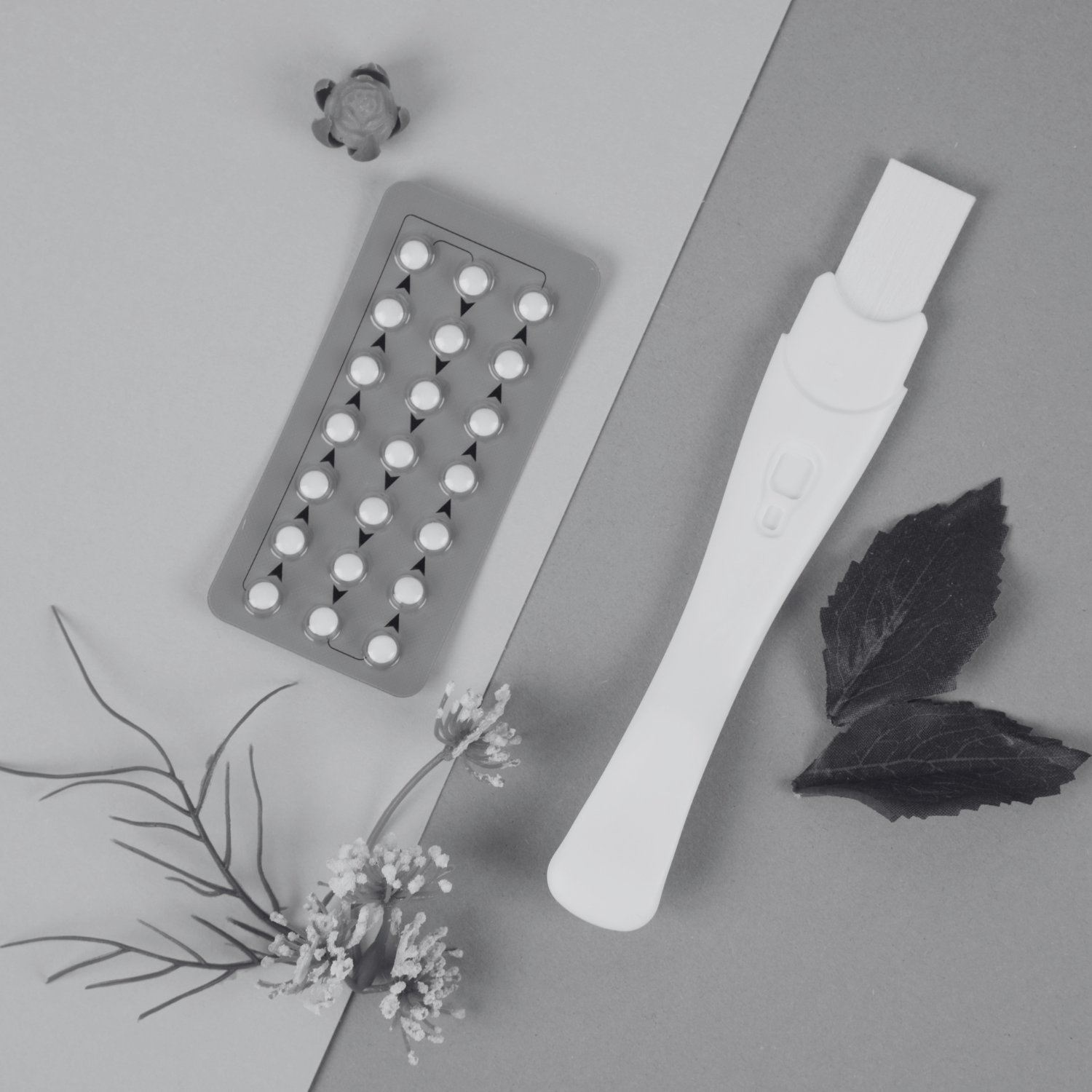

Hormonal contraception can make cycle assessment tricky because it may suppress ovulation or mask underlying irregularities that only show up once the patient stops taking it. Fertility often returns quickly after discontinuation, but our job is to determine whether the body is actually cycling well.
The first bleed after birth control is not always a true menstrual cycle. It may be a shed from progesterone withdraw. For practitioners, the post-contraceptive window is less about assuming normality and more about observing ovulation, cycle length, mucus quality, bleeding patterns, and any clues that point to deeper endocrine or structural issues.
Why This Matters
A patient can look “back to normal” on the surface and still be anovulatory or hormonally unstable underneath. This is especially important because hormonal contraception can temporarily suppress ovarian reserve markers such as AMH and AFC, which can make interpretation a little more complicated if the patient is evaluated too soon after stopping.
That does not mean the patient is infertile. It means the clinician needs context, timing, and a better read on what the body is actually doing rather than assuming the bleed equals ovulation.
What To Assess
A strong fertility intake after birth control should include:
- How long the patient used contraception.
- Which method they used.
- Whether cycles were regular before birth control.
- Whether they are seeing ovulation signs now.
- Whether there is spotting, skipped cycles, or a prolonged return to baseline.
- Whether there is a history of PMOS, endometriosis, hypothalamic suppression, or other cycle dysfunction.
I also like practitioners to ask whether the patient is using any fertility awareness tools, whether cervical mucus is returning in a fertile pattern, and whether luteal phase length seems stable enough to support implantation. If a patient cannot tell you whether ovulation is happening, that is already useful information. It tells you where the teaching and tracking need to start.
This matters because birth control can hide the real story. A patient may think everything is fine because they have a bleed, but the underlying pattern may still be anovulatory or unstable.

Method-Specific Return
Return to fertility varies by method and individual context. Injectable contraceptives tend to have the longest delay, while IUDs and implant methods often return more quickly, but timelines still vary from person to person. Oral contraceptives, patches, rings, IUDs, implants, and injectables do not all behave the same way in terms of cycle return.
That is why the method used matters in the intake. If someone stopped Depo-Provera, you should expect a different timeline than someone who stopped the pill or removed a hormonal IUD. It is also important not to panic if cycles are not regular immediately. Short-term delay is common, but ongoing irregularity deserves a deeper look.
What The Cycle Should Tell Us
The clinical goal is not just “period returned.” We want to see ovulation confirmed, cycles becoming predictable, an adequate luteal phase, and a bleeding pattern stable enough to support conception. We also need to watch for red flags that suggest co-management or referral is appropriate.
A few questions help refine that picture:
- Is cervical mucus becoming stretchy, slippery, and fertile again?
- Is there an LH surge followed by a temp rise or progesterone confirmation?
- Is the bleed full flow and rhythmic, or is it mostly spotting?
- Is the luteal phase long enough to support implantation?
- Are PMS symptoms predictable, or is the whole cycle still chaotic ?
If the answer to these is unclear, the cycle is still telling us something important. The body may be in transition, but that does not automatically mean it is ready for conception yet.
How Acupuncture Fits In
From a Chinese medicine perspective, this transition period is a great opportunity to support regulation, circulation, and nervous system downshifting while the body reestablishes its own rhythm. In a fertility clinic, acupuncture can support the patient’s transition into a more conception-ready pattern while also giving the practitioner a structured way to observe change over time.
At Aphrodite, the model is cycle-based and collaborative: use tracking, support the uterine environment, recommend practical lifestyle shifts, and stay alert to when a patient needs deeper evaluation or referral. We are not trying to force a cycle to look normal. We are helping the body show us where it is and what it needs next.
Practical support can include warmth to the lower abdomen, blood sugar stability, adequate protein, and cycle tracking tools that let both patient and practitioner see whether ovulation is truly returning. This is where acupuncture becomes more than symptom support. It becomes a way to observe physiology over time and guide the patient toward a more fertile baseline.
Related Post: How Acupuncture Restores Reproductive Wellness After Birth Control
When To Co-Manage
A patient should not stay in a wait-and-see loop forever. If cycles remain absent or highly irregular, ovulation is not returning, or there are signs pointing to PMOS, endometriosis, hypothalamic suppression, thyroid dysfunction, or another pathology, referral or co-management is appropriate.
This is especially true if the patient had irregular cycles before contraception and the pattern never really normalized after stopping. It is also true if the patient has other fertility factors in the picture, such as age-related urgency, a long TTC timeline, or a partner factor that makes waiting less useful. Good acupuncture care does not compete with Western care. It works alongside it.
Teaching Notes For Practitioners
A helpful teaching point is that hormonal contraception does not cause infertility, but it can delay the recognition of an underlying issue that was already there. Another important nuance is that long-term hormonal contraception may temporarily suppress ovarian reserve markers like AMH and AFC, so those markers should be interpreted in context and not in isolation.
Another useful point for clinic education is that fertility return can happen fast, but return to fertility is not the same thing as a clean ovulatory pattern. That distinction matters a lot in patient care, because it changes how we document progress, how we counsel timing, and whether we recommend further workup.
Related Post: What I Teach From Birthing Instincts #461: Timing, PCOS, and DOR in Fertility Acupuncture
Big Takeaway
Do not stop at “the period is back.” Read the cycle, track the pattern, and let the body show you whether it is truly ready for conception.
Join us inside AFAM and let’s build your specialty together.
Related Post: From Generalist to Specialist: How to Start Your Fertility Acupuncture Journey
| About the author Emily Marson, L.Ac. Emily is the founder of Aphrodite Fertility Acupuncture in San Diego, California. She specializes in complex reproductive cases, combining advanced fertility acupuncture with mitochondrial health protocols, precision nutrition, and a deep knowledge of both Eastern and Western reproductive medicine. Located at 2970 5th Ave, Suite 320, San Diego, CA 92102. |




+ show Comments
- Hide Comments
add a comment